
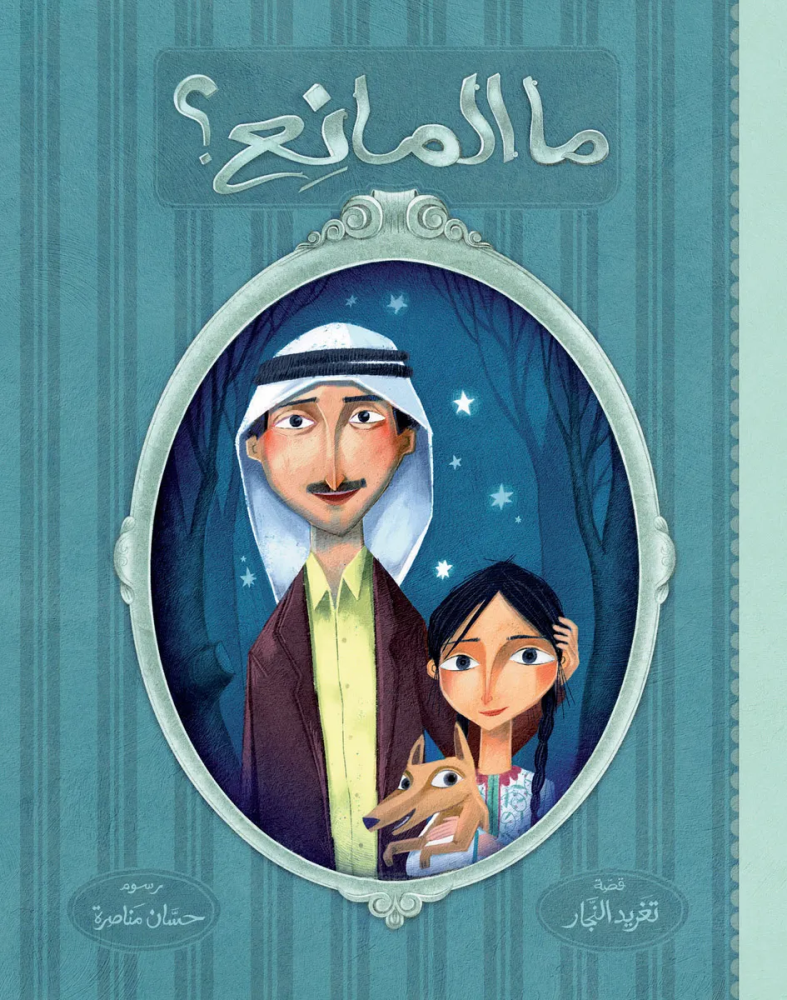

What's the stopping story?
Written by: Taghreed Al-Najjar
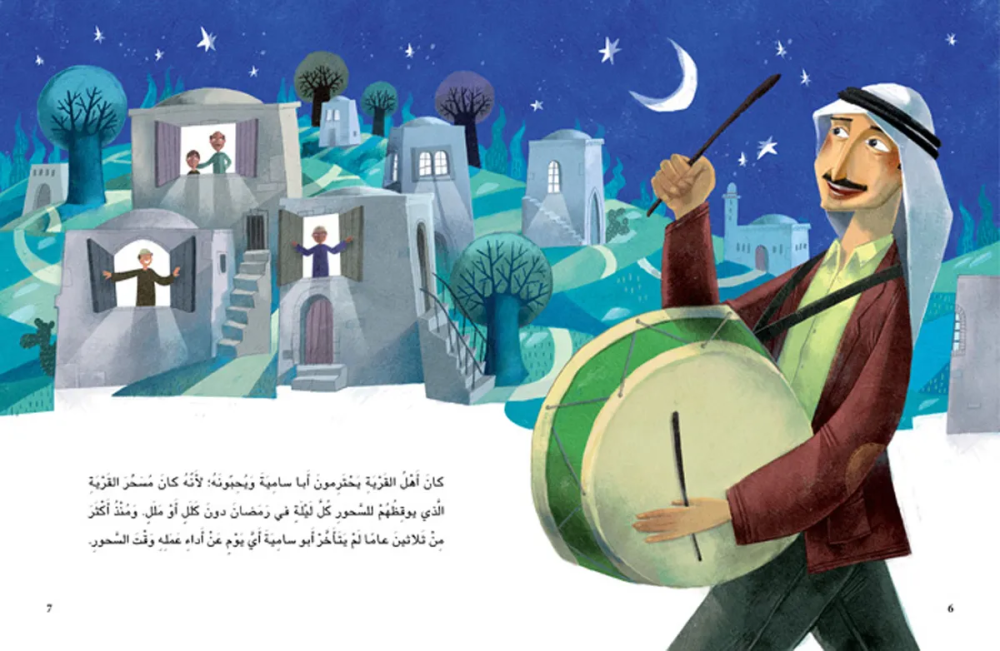
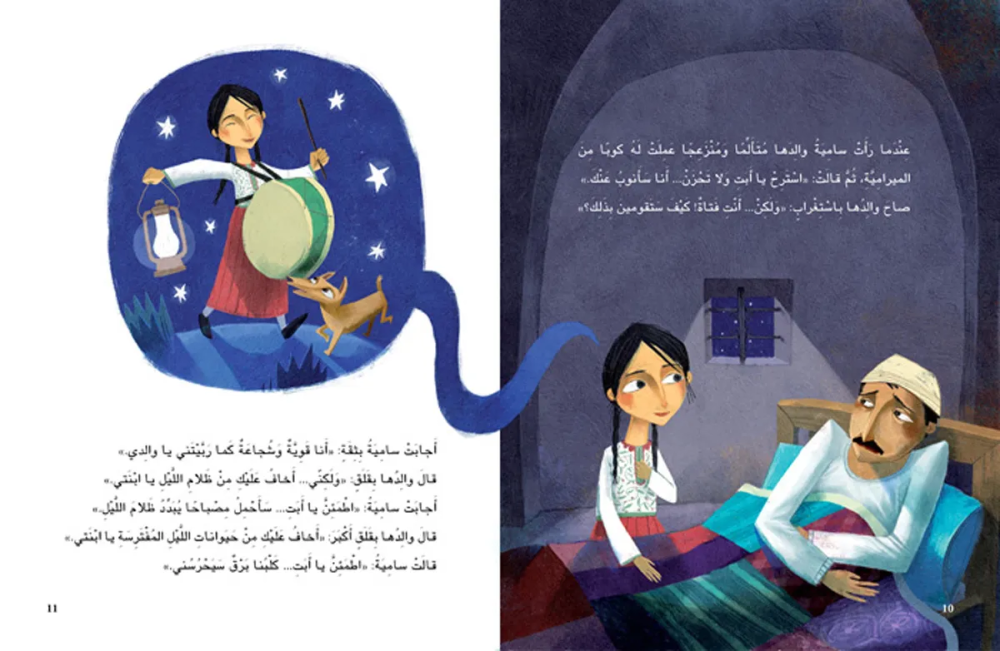
Samia's father has a traditional and important task he performs every year during Ramadan: he wakes the villagers up before dawn to eat suhoor, the pre-dawn meal, in preparation for fasting. But this year, a sudden illness has left him unable to perform his duty. In a moment of courage, Samia offers to take her father's place. Despite the difficulty of the task, Samia prepares to go out at night, carrying her father's drum to beat loudly, calling people to wake up.
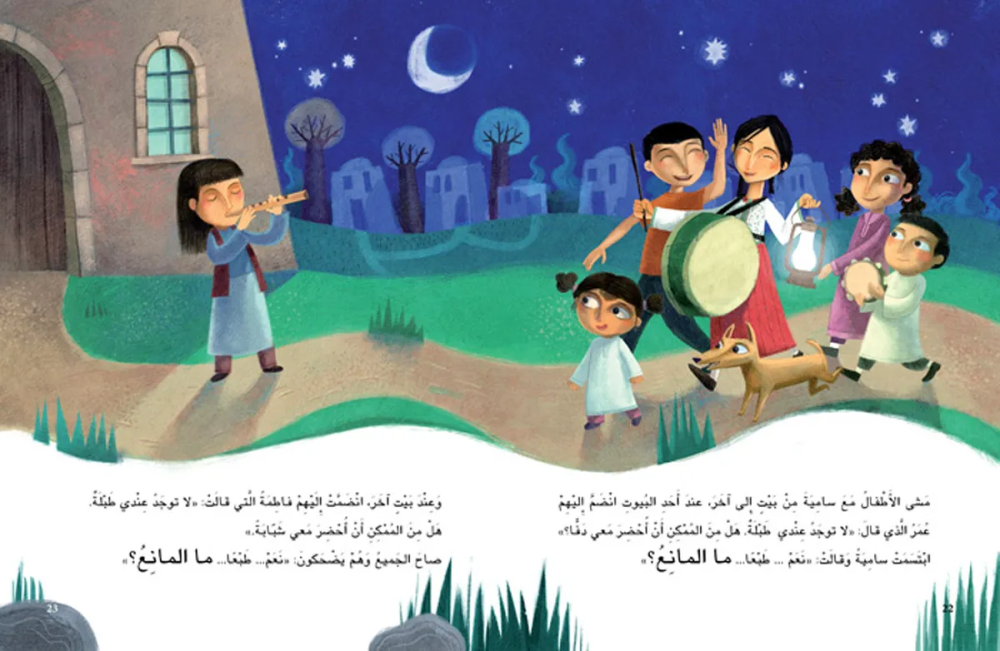
But Samia won't be alone on her journey. She's soon joined by Hamza, Fatima, and the rest of the village children. Each child carries their own instrument, and some even bring pots and pans! The group quickly transforms into a lively band, roaming the village streets in a scene filled with familiarity and joy.
"What's the Stopper?" is a warm and inspiring tale that reflects the values of courage and solidarity, and celebrates ancient customs in the beautiful village of Lifta in Palestine during the 1930s.
Parent and Teacher Guide
In the beautiful village of Lifta in the 1930s, Samia's widowed father works as a mesahar (a drummer) during Ramadan, having never missed a day of work for thirty years. But when he falls ill one night, Samia, feeling a sense of responsibility towards her father and the people of her village, decides to take his place and lead his rounds, waking people up for suhoor.
The villagers are initially surprised to hear a girl's voice beating a drum and singing songs, but they soon understand her position and encourage their children to join in. Instead of using traditional drums, each child uses a different instrument. Thus, the children form a spontaneous band, roaming the village singing songs and poems.
Over time, Samia and her friends' role grows, and the villagers offer them food and sweets in appreciation of their efforts. The story "What's the Hesitation?" reflects the spirit of cooperation and courage, highlighting the authentic customs of Ramadan.
The story also addresses the theme of changing traditions in a way that reflects the resilience of society in the face of changing circumstances, as the children used new, unconventional tools.
The story takes place in Lifta, whose inhabitants were displaced in 1948 and not allowed to return. By telling this story, the author honors Lifta and all the Palestinian villages destroyed in 1948, trying to keep their memory alive for future generations.